ComCom concerns over telecom disputes scheme

In this edition:
- Commerce Commission on TDR improvements
- Controversial MethaneSAT
- Southern Cross talks about Tasman Express
Dispute Resolution Scheme needs greater independence
The Commerce Commission is concerned the Telecommunications Disputes Resolution Scheme is still not fully independent of industry funding and control.
In his foreword to a report on the 2024 review of the TDR, Telecommunications Commissioner Tristan Gilbertson writes:
“We... want to see TDR complete its journey to independence from industry by ensuring it has the financial resources to focus on fairly resolving issues for Kiwi telecommunications users, rather than worrying about what telecommunications providers are prepared to fund.”
Many positives
Gilbertson has praise for the progress made to date:
“TDR has undergone a transformation by improving its governance and operations, boosting consumer awareness, covering more of the problems that matter to consumers and delivering faster resolution times – all without sacrificing high levels of consumer satisfaction with the service.”
And the report makes it clear that matters are much better than they were in the 2021 review.
Yet Gilbertson goes on to say there is room for improvement.
Independence
Specifically the report identifies that the New Zealand Telecommunications Forum (TCF), a body representing the industry, still has a 25% shareholding in the TDR. It also has an effective veto over the service’s budgets.
There’s a concern this may limit the TDR’s ability to act independently.
The report recommends there is a review of budget independence by July 2026.
Elsewhere there are a few other frustrations. The report notes one recommendation from the earlier 2021 report and still not implemented: the public reporting on systemic issues revealed by the TDR. It says analysis of these recurring problems is under-resourced.
This matters because reporting on systemic issues allows regulators, including the Commerce Commission, to detect industry-wide harm. It is a matter of accountability.
Low awareness
The Commission worries that public awareness of the TDR remains low despite years of work. It says only 20% of the public know the scheme exists. This figure is considerably lower than awareness of banking and motor dispute schemes. The scheme’s marketing budget was reduced during the reporting period.
Another frustration is that broadband and coverage complaints are still largely excluded from the TDR.
Comparisons with Australia
One of the most telling numbers in the report is the revelation that Australians are 25 times more likely to use that nation’s roughly equivalent Telecommunications Industry Ombudsman than New Zealanders using the TDR.
Meanwhile New Zealanders are three times as likely to use Utilities Disputes which handles consumer complaints about electricity.
Direct comparisons are difficult, but it’s reasonable to conclude the TDR is underused, which can be seen as a structural weakness.
More regulation and consumer rights stories:
- One NZ hit with $1.1 million fine – A significant regulatory response to misleading 111 emergency claims.
- Chorus and the copper deregulation case – The shifting legal landscape for New Zealand's legacy networks.
- Broadband disclosure: A decade of flaws? – Looking back at why transparency in telco pricing is still a struggle.
- The $60 million rural connectivity fund – The ongoing government effort to bridge the digital divide and improve regional service.
MethaneSAT claims contradicted by minister's briefings
Documents obtained by Newstalk ZB show public claims from MethaneSAT about the failed satellite project’s performance were contradicted by briefings provided to the minister.
In early October 2024, MethaneSAT told RNZ that there were no issues with either the satellite or its data collection performance.
Yet briefings to Space Minister Judith Collins at the same time showed there were ongoing problems requiring intensive manual intervention by Rocket Lab staff.
The ministerial briefings described staff working hard to manage issues with persistent data recorder resets and increased requirements for console time. There was also a need for automated systems and software patches to address the problems.
By the end of the week
One briefing noted they would know "by the end of the week" if solutions had been successful.
University of Auckland physics professor Richard Easther called the ministerial briefings a "smoking gun", saying it was "widely suspected in the science community that MethaneSAT had not been fully honest in its media statements".
Easther is now calling for an Auditor-General investigation into the $30 million taxpayer-funded satellite, which lost contact with ground control in June and is believed to be unrecoverable.
The New Zealand Space Agency defended MethaneSAT, saying there were "differing technical views" in the complex mission and "the mission owner must decide the overall position". But MBIE's own report acknowledged that "limited visibility into operational discussions and challenges undermined public confidence".
While MethaneSAT is not a telecommunications satellite, the episode highlights the risks and accountability challenges associated with space projects.
Southern Cross Cable talks Tasman Express plans
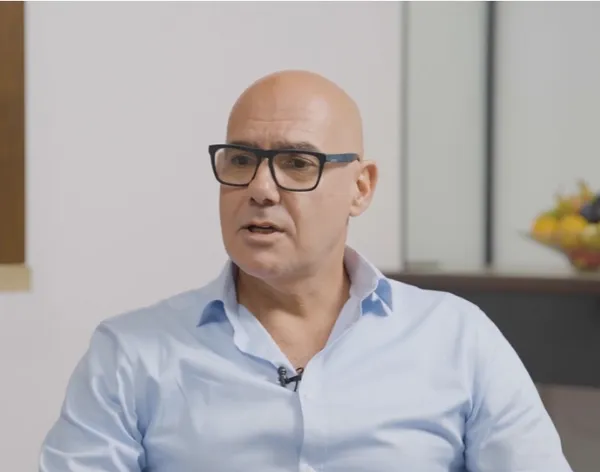
Speaking in a video interview for Capacity Global, Southern Cross’s business development vice president Matt Wall says the proposed Tasman Express cable is part of the company’s strategy to replace its existing network when it reaches end of life around 2030.
Wall told the interviewer that the Sydney-Auckland cable is aiming for a significantly lower-latency path than existing routes between Australia and New Zealand. The aim is to pick up on the current growth in data centre capacity in and around Auckland.
He also talked about a potential lack of capacity across the Pacific when the North and South legs of the current Southern Cross network are retired.
There is new capacity being built, but the main project is from Google and is largely earmarked for the company’s internal use. See Why do companies like Facebook and Google build submarine cables?
Southern Cross’s Tasman Express plans will run into competition with the planned Tasman Ring Network being built by Datagrid.
In other news...
- EB Games mulls closing all New Zealand stores — RNZ
- Netflix preparing all-cash offer for Warner Bros to fend off Paramount — Financial Times
- Why Rakon’s $390m takeover failed — Businessdesk (paywall)
- Australia's social media ban, one month on — BBC
Richard Riley steps into John Hanna’s role at Tuatahi First Fibre
Tuatahi First Fibre appointed Richard Riley as interim CEO following the retirement of John Hanna. The fibre company says this will ensure continuity while the board looks for a permanent CEO.
Riley has previously worked for Tuatahi in 2011 in senior executive roles across operations, customer experience, marketing and business growth strategy.
NZ cyber crime losses up 119%
The National Cyber Security Centre reports direct financial losses due to online crime were $12.4 million in the third quarter of 2025. This compares with $5.7 million in the second quarter. The NCSC says: “This increase was caused by a small number of high-value loss reports involving the unauthorised or falsified transfer of money”. Business email compromises were behind the crimes.
Elsewhere there were 110 incidents requiring NCSC involvement “because they were of potential national significance”. This was close to double the 56 incidents in the second quarter.
For an early report about cyber crime trends in New Zealand.
 Bill Bennett
This time last year New Zealand relative broadband performance dropped
With other nations nearing 100% fibre coverage, New Zealand’s failure to reach beyond the 87% of people covered by the UFB footprint began showing up in international statistics. After reaching a high point of 12 in the world for fixed line broadband speeds in 2023, New Zealand dropped to 29, that is despite line speeds increasing for those people on fibre.
 Bill Bennett
Five years ago: Schools faced a fresh wave of cyber threats
 Bill Bennett
Download Weekly is a New Zealand telecommunications industry newsletter. You are welcome to pass it on to your friends and colleagues. While the newsletter is free, reader support helps enormously. If you’re reading this for work, donations are tax-free. There's a banner at the top of the page which will take you to the support site.
Have your say. Sign up as a subscriber, it is free, to comment on any of the stories on this site. We don’t collect any personal data other than an email address.
Member discussion