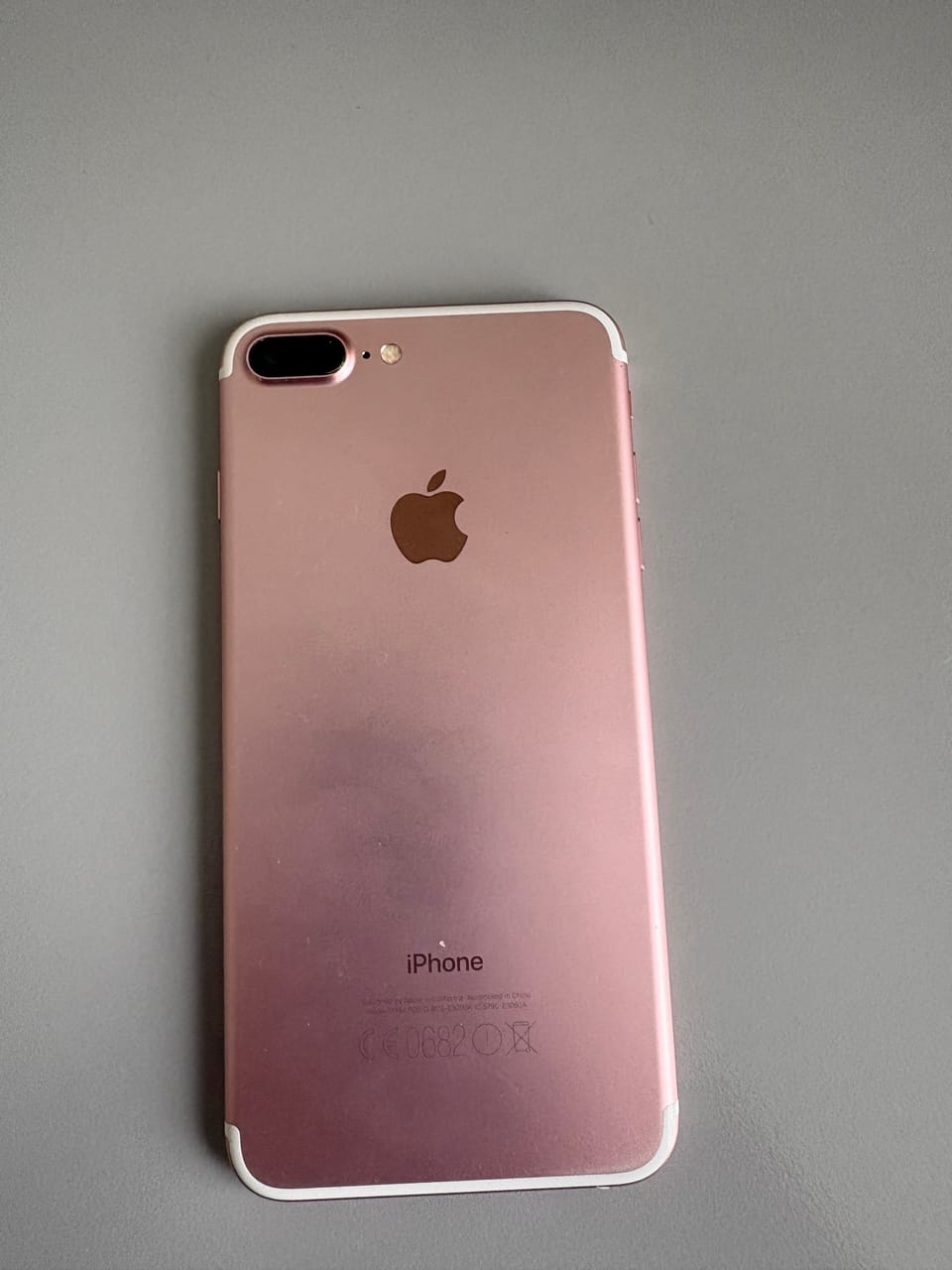
Is the iPhone 7 Plus viable at the end of 2024?
Living with an 8-Year-Old iPhone, some surprises
✓ Hardware still works fine for basic tasks
✓ Battery can last a work day (just barely)
✗ App compatibility is the killer - stuck on iOS 15
✗ Modern screens make a huge difference
Verdict: Workable for light users, but prepare for app frustrations
The plan was to see how well 2016’s best phone copes with 2024 conditions. The iPhone 7 Plus became my main handheld device for two months.
It fared better than I expected, although there were frustrations. What I learned surprised me.
In the end, I couldn’t wait any longer to upgrade to an iPhone 16 Plus. There were two reasons for ending the experiment.
Today's bigger displays are better than you think
First, the display.
While going from a 5.5 inch screen to a 6.7 inch screen doesn’t sound like a big jump, there is 50 percent more viewable screen. You get so much more from the bigger, brighter modern display.
Compared with the practical reality of a larger screen, most of the other differences between the two phones pale into insignificance. Most, but not all.
Software is the biggest issue
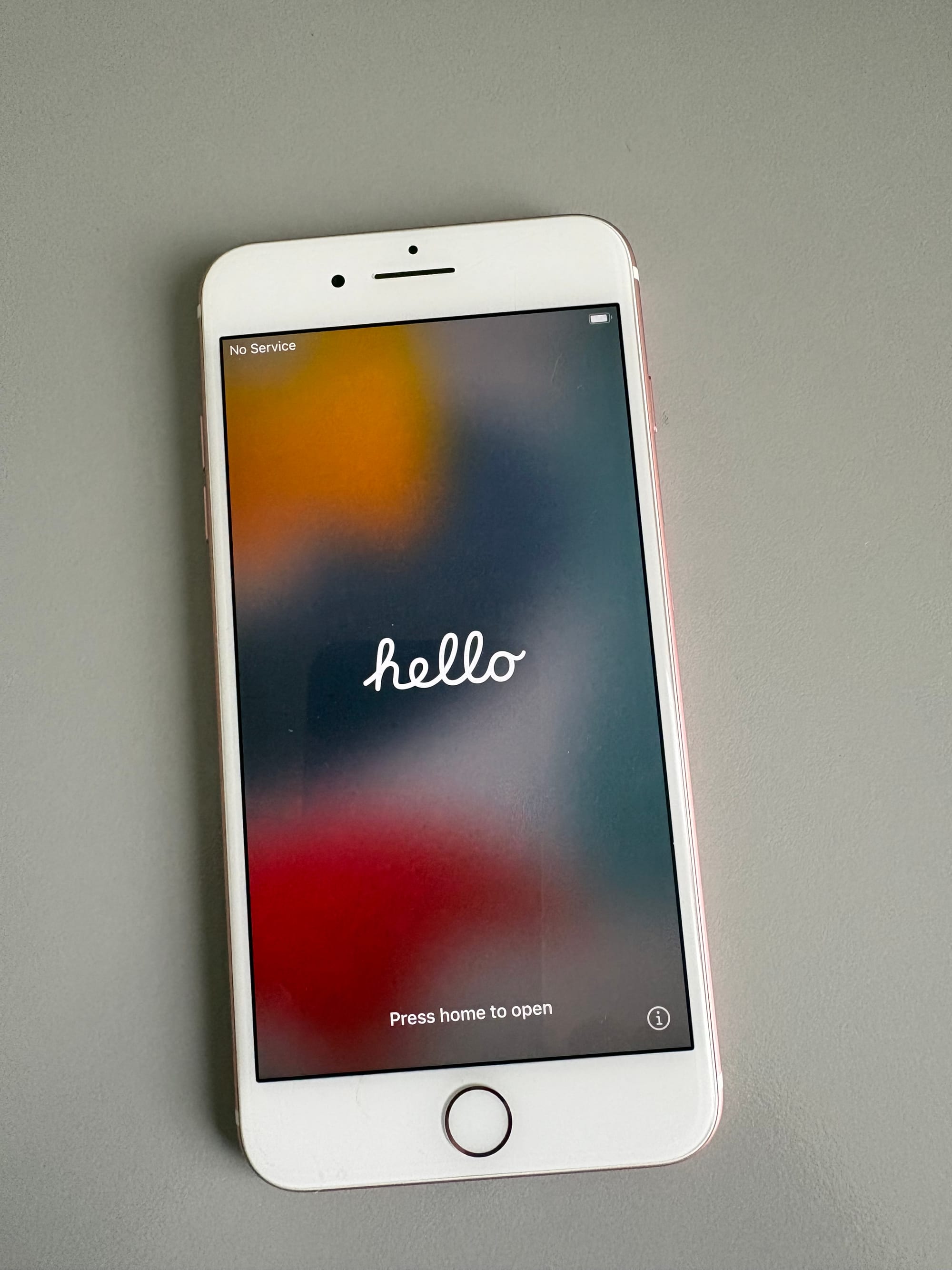
Operating system upgrades for the iPhone 7 Plus stopped with iOS 15. There was an update earlier this year, the phone runs iOS 15.8.1.
It’s a recent enough update not to be a security headache and it performs well enough. But there is one major drawback, many apps do not support iOS 15.
When I flew to Wellington in November, the Air New Zealand app needed updating, but the app requires a more recent version of iOS to function. For the first time in years I needed a paper boarding pass.
That’s not a deal breaker in itself, but there were other apps that would only function with a new version of iOS. And when one flipped from usable to unusable during my short time with the phone, the writing was on the wall.
What I didn’t miss when I downgraded
There are many nice-to-have newer iPhone features that I found I could live without when I switched from the iPhone 15 to the iPhone 7 Plus.
Face ID is better than the Touch ID used by the iPhone 7 Plus, but it’s not essential. The main benefit of moving to Face ID is that it frees up the front of phone space for more screen.
New iPhones have built-in wireless charging, the older one did not. I have a wireless charger, but rarely use it. The only time this feature caught me out was when I was staying overnight in a hotel and put the old phone on a wireless charger, then woke up with a nearly empty battery.
I had a spare Lightning cable for charging the older iPhone. When I travelled away from home it meant remembering and carrying an extra cord, but that’s not a big deal.
Modern features I barely missed
There’s no question the 3nm A18 chip and 8 GB of LPDDR5 Ram offer much faster performance and better energy efficiency than the iPhone 7 Plus’s 16nm A10 Fusion chip with 3 GB of Ram. But I can’t say I really noticed the higher processor power in practice.
That’s probably because I don’t use demanding apps on my phone. And, admittedly, some of the recent apps that need power don’t run on the older iOS anyway. Yet, at no point in my time with the older phone did I find myself thinking things were sluggish.
Battery life, on the other hand, was noticeable. There’s just about enough juice in the iPhone 7 Plus to get through an extended working day on a single charge.
I sometimes experienced ‘range anxiety,’ though I never ran out of power completely. I did have to remember to be careful. There is none of this with newer iPhones. They have larger batteries and more frugal processors.
It was only when I checked the specifications of both phones to write this post that I noticed the iPhone 7 Plus doesn’t have 5G network support. At no point was this a problem. Indeed, there is no discernible difference between 4G and 5G network performance in everyday use. As I've written before, 5G was never really about improving the consumer phone experience.
This reinforces the earlier post about phones reaching an evolutionary dead end — most new features no longer make a meaningful difference.
A newer camera is nice but less important than you might think
All phone makers spend a lot of energy telling customers about the fabulous cameras on their phones. And yes, the ones on newer handsets are way better than the Dual 12 MP cameras and 2X optical zoom on the iPhone 7 Plus.
But at no point during the two month experiment was this an issue. I never found myself thinking “how I wish I had dual 48 MP main and 12 MP ultra-wide cameras, with enhanced low-light performance, cinematic mode and 4K video recording at 60 fps to capture this scene”.
If anything, I like the fact that pictures from the iPhone 7 Plus were instantly usable. If I ever take pictures on a newer iPhone, I have to stuff around converting them from the fancy formats like HEIC to jpg before sending them to the newspaper subs.
While modern phone cameras can be amazing, the physics of photography mean you can often get better pictures from the bigger lenses and greater depth found in non-phone cameras.
This was a revelation and helped me clarify thoughts about which modern phone to buy at the end of the experiment. I may previously have considered the iPhone 16 Pro Max on the grounds that I could get better work photos with the upscale camera. That fact that iPhone 7 Plus images are more than adequate spared the additional expense.
People are hanging on to phone hardware for longer and that is having an important impact on the market. This post is from two years ago:
 Bill Bennett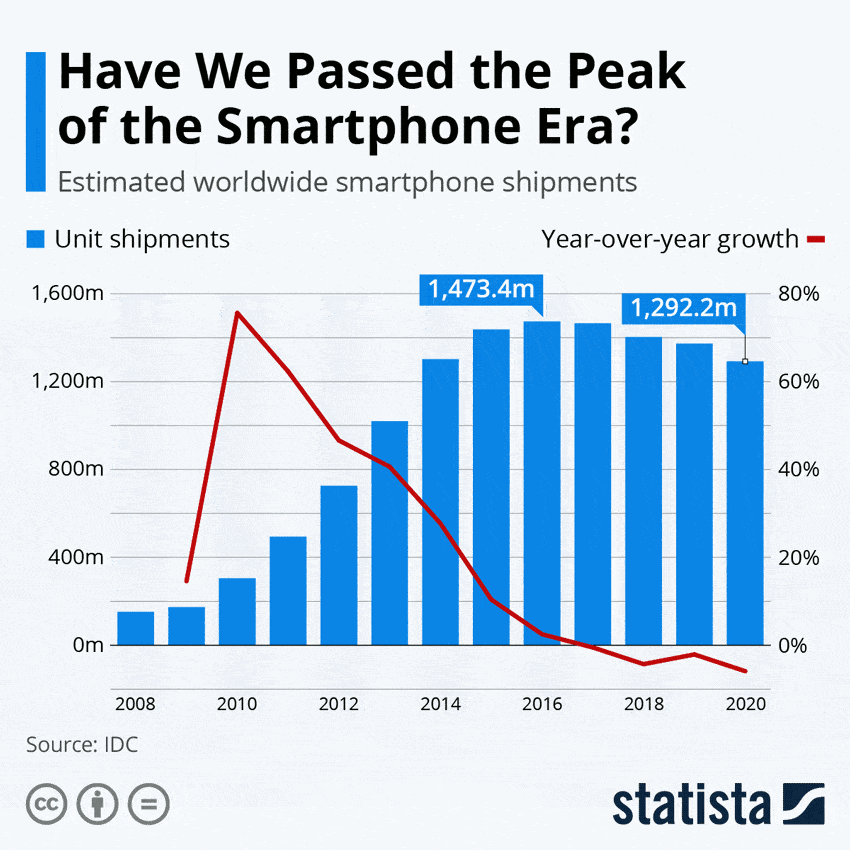
Update: January 2026
More apps have dropped iOS 15 support since December 2024, especially popular social media apps. My core remaining apps still work 13 months after the story was first posted, but it is unlikely I will install any more.
Apple has updated iOS 15 a further four times since the story was first posted. The last, iOS 15.8.5 was released in September 2025.
Like 15.8.4, it was a security update. While Apple has not formally announced the end of support for iOS 15, we are deep into a legacy, security-only update cycle. iOS 15.8.5 may be the last update unless there a new critical vulnerability is found.
I haven't used the phone for anything but testing in the last year, so the battery has not further degraded. The screen continues to function.
What did this teach me about modern iPhones?
Despite being eight years old, the iPhone 7 Plus came close to being all the phone I need for my work. At a pinch I could live with the smaller, less bright display, I might not be as productive or get as much from the phone, but it’s a compromise that could be worth making.
In comparison the software issue is a step too far. Yes, you can get longer life from your hardware and security isn’t scary on an eight-year-old iPhone. But the lack of key apps is only going to get worse over time. During the test I noticed one of my apps updated to a new version that’s not usable on the older phone. Sadly I was in a hurry at the time and didn’t document that.
This exercise emphasised the importance of iPhone software. Eight years is about the limit of usefulness for an iPhone if you need it for serious work. A six year old model would fare much better.
What should you buy instead?
If someone gave you an old iPhone 7 Plus in 2026, you may want to stick with it for now. If you were looking a buying an old iPhone, for whatever reason, there are smarter alternatives than going all the way back to the iPhone 7 Plus.
- iPhone XR: This 2018 model still gets iOS updates, it has a bigger screen and sells for roughly the same amount at the iPhone 7 Plus.
- iPhone 11: Apple's 2019 phone should be good for a few years yet. It is still on full support. and has a much better camera than the 7 Plus or XR. Expect to pay around NZ$300-400.
- iPhone SE 2nd gen (2020): This is a smaller device, but has a noticeably better chip and, so long as you're OK with the small screen, can do much more. My review of the 2020 Phone SE 2nd gen is still online. Expect to pay around NZ$300 to 400.
More iPhone and iOS posts:
- Dragon Anywhere: Professional dictation on iOS – Looking at the early days of high-end mobile productivity.
- Apple Watch Series 2: A retrospective – The early hurdles of Apple’s entry into wearables.
Member discussion