Archive: When VDSL and LTE threatened New Zealand's fibre progress
The Missed Opportunity
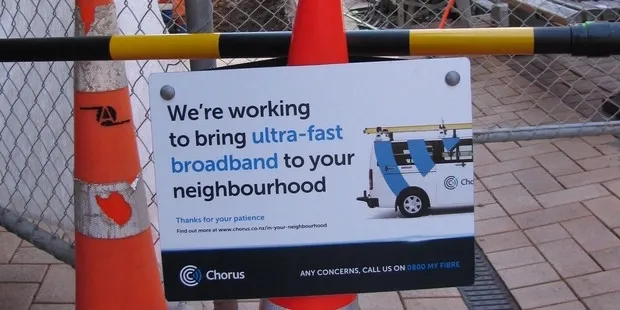
While fibre was clearly New Zealand's future in 2012, it wasn’t there yet. It would take another six or seven years for the UFB network to reach everyone in cities and towns. And in the event there were extensions which took the project into 2022.
During that gap, VDSL (Very-high-bit-rate Digital Subscriber Line) was a technology that could have given many users much better connections while they waited for fibre to roll down their street.
VDSL squeezes significantly higher speeds from copper networks than the standard ADSL2+. At the time, I was seeing 12 to 15 Mbps on ADSL; with VDSL, I could have doubled that download speed and seen 10 Mbps uploads.
The Gateway Drug Argument
So why wasn't VDSL more widely used? It wasn't about the technology; it was about the politics.
In 2012, the then Tuanz CEO, Paul Brislen argued that Commerce Commission regulations artificially inflated the price of VDSL. The industry was split. One camp saw VDSL as a “gateway drug”—once people got hooked on higher speeds, they would be even more eager to jump to the fibre network once it passed their gate.
The flip-side argument was more cynical: some feared VDSL was too good. If customers were happy with 50 Mbps on copper, they might see no need to pay for a UFB connection. In this view, high VDSL prices were an artificial barrier erected to make fibre pricing look more attractive.
Carrots, Sticks and Costs
The price difference was stark. In 2012, I was paying $105 for a Telecom Total Home Broadband plan (120GB). A similar VDSL2 plan cost around $160 and there would be charges on top of that. Meanwhile, the promised 100 Mbps fibre plans were expected to land at around $130.
For many micro-businesses and residential users, the $2,000 extra cost over two years to have "better copper" didn't make sense if fibre was just around the corner. By keeping VDSL expensive, the regulators ensured that when fibre arrived, the transition was a "no-brainer."
Pricing crisis, $160 million hit
The VDSL debate was only one side of the coin. On the other was a fierce regulatory battle over the price of services on the copper network itself. In December 2012, the Commerce Commission released a draft decision to slash wholesale copper prices.
The reaction was immediate and seismic. Chorus shares plummeted 14 per cent as the company warned investors the move could wipe $160 million from its annual earnings. Chorus CEO Mark Ratcliffe argued that if copper prices were forced too low, it would destroy the business case for fibre.
The crisis became so acute that Prime Minister John Key refused to rule out legislating to override the regulator. It was a bizarre moment in New Zealand politics: a National government, usually champions of the free market, was prepared to intervene to keep prices high just to protect the UFB rollout.
The wireless wildcard: LTE trials
While the industry was fighting over copper and glass in the ground, a third threat was emerging from the air. In December 2012, Telecom (now Spark) switched on its first 4G LTE trials in Auckland and Wellington.
At the time, the performance was eye-opening. While many of us were struggling with 10-15 Mbps on ADSL, these early LTE trials were pushing speeds of 50 Mbps. I noted then that 4G was likely to reach my suburb long before the fibre network arrived.
It raised a question that remains relevant today: if wireless could deliver fibre-like speeds without digging up a single driveway, would the massive investment in UFB still make sense? In 2012, some feared LTE wasn't just a complement to fibre, but a potential "fibre killer" that could lure customers away from the fixed network before it was even finished.
2025 Postscript: Where we are now
Looking back, the "Gateway Drug" argument was settled by the success of the UFB rollout. When the build was largely complete in 2022, New Zealand's fibre uptake was one of the highest in the OECD. Today, the copper network is being retired entirely. As of 2025, Chorus is withdrawing copper services in all fibre-available areas, and the "missed opportunity" of VDSL has officially become a footnote in New Zealand's telecommunications history.
Member discussion