
IoT in New Zealand
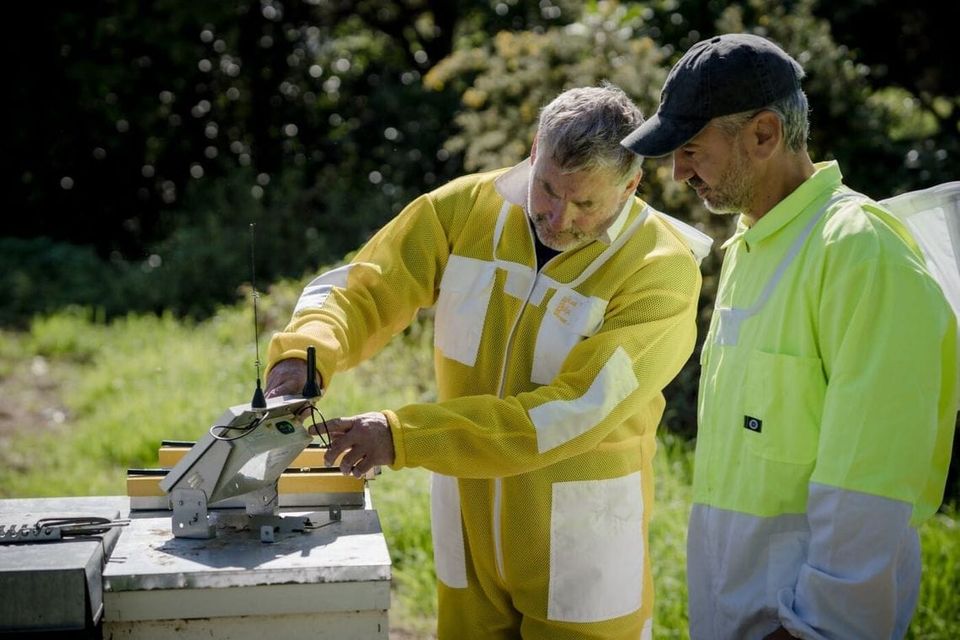
The internet of things (IoT) connects physical devices to digital networks. In New Zealand it is widely used, particularly in rural industries, infrastructure and utilities.
IoT ‘things’ can be devices, machines, vehicles or infrastructure. In the home they can be domestic appliances. They are equipped with sensors, software and connectivity that allows them to collect and exchange data.
The technology is already embedded into everyday life. In New Zealand cities it includes connected bus shelters, smart bins and other smart city infrastructure. In rural areas farmers use IoT for precision farming, livestock tracking and environmental monitoring.
Operational IoT
Network operators, in energy as well as in the telecom sector, use IoT to transform operations. It enables predictive maintenance, asset tracking and process automation.
Linking the physical world to the digital world means we can monitor, analyse and act on real-time information. Coupled with automation and AI, IoT users can run large scale operations.
IoT systems combine devices, connectivity, data processing and applications that trigger action.
Challenges
There are challenges. Security is a major concern. Cyber criminals and hostile nations see networks of connected devices as a potential entry point for attacks.
Data privacy is another issue, particularly in consumer and healthcare applications where sensitive information is involved.
Another challenge is interoperability. There is a lack of common standards for the hardware and the systems.
Meanwhile IoT applications can generate vast volumes of data that needs moving and storage.
IoT networks
IoT networks are well established in New Zealand. We use a mix of cellular and non-cellular networks to support IoT, reflecting the need to cover both dense cities and remote rural areas.
Two of the main carriers provide widespread networks. Technologies used for IoT include the 4G mobile network, LTE-M, LoRaWAN and NB-IoT.
- 4G mobile networks support higher-bandwidth IoT applications and act as a fallback where specialised IoT networks are not available.
- LTE-M (Long Term Evolution for Machines) is a low-power wide area network (LPWAN) technology designed for IoT devices that require higher data rates and mobility.
- NB-IoT (Narrowband Internet of Things) is optimised for low-power, low-data-rate applications. It has excellent building penetration and long-range connectivity for stationary devices.
- LoRaWAN (Long Range Wide Area Network) is a non-cellular LPWAN technology that operates on unlicensed radio frequencies. It is designed for ultra-low power consumption, allowing sensors to operate for years on a single battery while transmitting small amounts of data over very long distances.
New Zealand carriers offer private 5G networks. 5G mobile networks can also be used for IoT applications.
Private networks using 5G have low latency making the technology suitable for real-time control of manufacturing and autonomous vehicles. It can also handle high device density and higher data rates for applications like high definition video.
Satellite IoT
More recently low Earth orbit satellite network operators have talked up their IoT capabilities especially where devices are located in remote areas.
Satellite IoT is still emerging as a way of extending the IoT footprint. Potentially it will set up competition between terrestrial low-power networks and the new frontier of Direct-to-Cell satellites.
New Zealand IoT has already moved away from trial projects and toward mass-scale industrial use.
Further reading on IoT:
This page is part of a series of background briefings on New Zealand’s telecommunications industry:
• Mobile networks in New Zealand
• Rural telecommunications in New Zealand
• Satellite communications in New Zealand
• Fibre networks in New Zealand
Member discussion