
Tū Ātea fears RanCo could block Māori spectrum
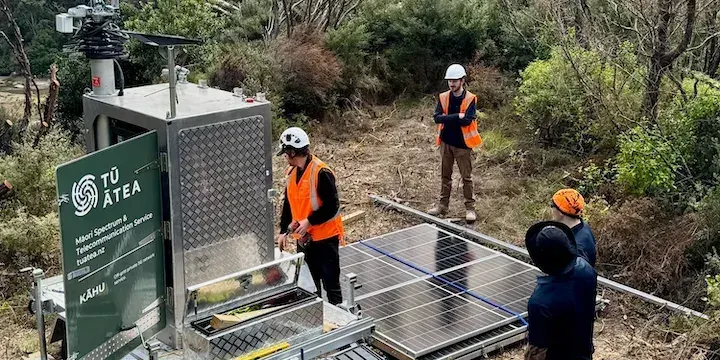
Joint venture could become a gatekeeper
Māori-owned telco Tū Ātea says the proposed One NZ–2degrees radio access network joint venture (RanCo) could act as a gatekeeper, making it harder to get Māori spectrum onto mobile networks.
Tū Ātea holds commercial 4G and 5G spectrum, but relies on mobile network operators to host its services.
In its submission to the Commerce Commission investigation of the proposal, Tū Ātea says:
Today, if 2degrees or One NZ agrees to supply one of these services, it can implement it on its own network. With RanCo, it would need RanCo to implement it. That raises two practical questions: Who decides and who knows.
Power of veto
Tū Ātea warns that if the joint venture goes ahead, these decisions would sit with the new company. Tū Ātea told the Commission this gives RanCo the power to veto third-party hosting requests or expose confidential wholesale customer plans. This risks sidelining Māori spectrum holdings, which are set to grow under Crown commitments.
A further concern is that the proposed joint venture threatens Tū Ātea's commercial infrastructure operations. Tū Ātea Network Services (formerly Broadtech) designs and builds cell towers as the primary strategic build partner for tower company Fortysouth, as well as providing services to Connexa.
Because RanCo’s core purpose is to consolidate overlapping equipment and eliminate duplicate infrastructure, Tū Ātea says fewer new cell sites will be built nationwide. It says the fall in construction revenue could erode funding for its field-services workforce programmes, which create technical training pathways and skilled jobs for Māori.
SafetyNet fears RanCo could delay emergency upgrades
SafetyNet, the Crown agency responsible for emergency service communications, wants the Commerce Commission to ensure the proposed One NZ–2degrees RanCo joint venture does not compromise public safety networks.
One NZ powers back-end cellular services for New Zealand’s emergency services through the Public Safety Network. It delivers priority coverage, and roaming for first responders. SafetyNet fears that transferring radio network control to RanCo could give 2degrees the power to delay or veto essential back-end upgrades needed for public safety.
In its submission to the Commerce Commission, SafetyNet asks regulators to seek firm guarantees that public safety requirements will not face "unreasonable delay, cost or constraint" simply because they are not shared by 2degrees.
Legal limits on guarantees
Securing those guarantees may prove tricky. Under Section 66 of the Commerce Act 1986, the Commerce Commission cannot issue a "conditional" clearance tied to ongoing operational promises. It can only say yes or no based on whether the deal substantially lessens competition.
If these public safety risks are deemed significant, the applicants would either need to offer binding structural remedies or amend the deal's operational rules themselves to satisfy regulators.
Single point of failure
SafetyNet also warns of the risk consolidating two national mobile networks onto shared radio gear. Running around 60 percent of New Zealand's mobile connections on common active electronics and baseband software creates a single point of failure during natural disasters or cyber incidents.
While SafetyNet is not opposed to the joint venture on competition grounds, it says that any network efficiencies must not come at the expense of the quality, resilience or emergency responsiveness that New Zealanders rely on during a crisis.
Tuanz warns RanCo deadlock could stall upgrades
The Technology Users Association of New Zealand (Tuanz) warns that a 50/50 joint venture creates "hold-up" risks for business connectivity.
If One NZ wants to roll out a specialised network feature for an enterprise client but 2degrees faces financial constraints and vetoes the capital spending budget, both networks could be left with under-invested equipment.
Tuanz suggests a middle-ground solution similar to Australia's model. This would allow One NZ and 2degrees to share radio gear strictly in rural areas where duplicate builds are uneconomic, but require them to maintain independent, competing radio networks in major cities.
As with the SafetyNet concerns, this runs into the limits of the Commerce Commission’s ability to issue a "conditional" clearance. To make an Australian-style regional split happen, One NZ and 2degrees would have to formally rewrite the scope of their application before the Commission decides.
Analysis: RanCo submissions
The first set of submissions covered in last week’s October 23 newsletter focused on competition questions surrounding the RanCo joint venture. This week’s three submissions, especially Tuanz and Tū Ātea, shift the conversation towards structural conditions.
In its submission Tuanz acknowledges that the Commerce Commission
cannot enforce behavioural promises under section 66 of the Commerce Act 1986. The Commission's power is passive: it evaluates the application brought to it. It can either clear or decline. It lacks the power to draft a compromise or force the applicants to accept a modified deal.
If the Commission has preliminary concerns the proposal raises competition issues, it issues a Statement of Issues. At this point, the onus falls on One NZ and 2degrees to offer structural carve-outs or risk having the application rejected.
ComCom recommends ending mobile colocation rules
The Commerce Commission has recommended deregulating mobile tower colocation. It says the rules introduced in 2001 are no longer necessary after mobile operators sold their towers to independent infrastructure companies Connexa and Fortysouth.
Telecommunications commissioner Tristan Gilbertson says tower companies now rely on attracting multiple mobile operators as tenants, creating strong commercial incentives to share sites without state intervention.
The Commission noted that alternative technologies, including 5G densification, roaming, Ran sharing and satellite-to-mobile, reduce the need for colocation.
Ran sharing is at the core of the proposed One NZ–2degrees radio access network joint venture (RanCo) mentioned in the previous stories.
Tuanz disagrees with the recommendation. The Technology Users Association of New Zealand says long-term agreements between tower companies and network operators could create barriers for new entrants. The Commission says keeping the rules would not benefit consumers. It says it will monitor the market rather than modify legacy rules.
Background:
 Bill Bennett
Revised code aims to simplify telco plan comparison
The New Zealand Telecommunications Forum (TCF) has released an updated Product Disclosure Code. It aims to make it easier for consumers to compare broadband and mobile plans.
Changes include clearer product descriptions and standard plan cards.
The updated code aligns with Commerce Commission retail service quality guidelines. It introduces stricter requirements for telcos to present residential pricing, terms and service features using standardised terminology and formats.
TCF chief executive Paul Brislen says that while telecommunications is essential, inconsistent plan presentations historically made head-to-head comparisons difficult. He says standardising information boosts market transparency, helps consumers choose and encourages competition.
In other news
- Mobile speeds in the world’s most liveable cities — Ookla
Speeds show little link to liveability rankings. - Labour backs under-16 social media ban — Interest
Plan follows Australia’s lead and includes a regulator. - NZ websites slow to patch PHP vulnerability — NZ Herald (paywall)
Many sites offline as a precaution.
Dan Kelly to lead Vector Fibre
A LinkedIn post from Vector Fibre names Dan Kelly as the infrastructure company’s new general manager. Kelly replaces Laura Smythe, who is staying at Vector Fibre. He was previously at Chorus where he was executive general manager Access. Before that Kelly worked at Sky and Vocus (now part of 2degrees.)
Wong joins Fortysouth as chief commercial officer
Jilyut Wong has joined Fortysouth as the tower network company’s chief commercial officer. Wong replaces Steve Rieger, who moves to the chief operating officer role. Wong spent more than 18 years at Spark. His most recent position was as general manager of Wholesale & International. He was also a director of the Southern Cross Cable Network.
Spark’s Entelar signs Ciena distribution deal
Spark subsidiary Entelar Group has signed an agreement to distribute Ciena networking technology in New Zealand. Entelar says it will provide technical expertise, network design, training and ongoing support, targeting telecommunications companies, data centres, utilities, government and large enterprises. The deal aims to meet growing demand for network capacity and resilience as data traffic, cloud computing and use of AI increase.
This time last year we looked at the City Rail Link mobile network
One New Zealand worked with Nokia on behalf of all three carriers to build a network giving train passengers full 4G and 5G coverage. The technology is also used for real-time train tracking, emergency communications and integration of CRL with Auckland Transport systems.
Five years ago Vodafone rebranded its wholesale division
Vodafone’s reorganised wholesale operation became Vodafone Infrastructure Partners. The business aimed to target mobile virtual network operators, Internet of Things and iwi. It is now known as One NZ Infrastructure Partners.
Ten years ago government announced RBI2
Communications Minister Amy Adams said the government would spend $150 million on the second stage of the Rural Broadband Initiative, which was eventually won by the Rural Connectivity Group.
Download Weekly is a New Zealand telecommunications industry newsletter written by Bill Bennett. You are welcome to pass it on to your friends and colleagues. While the newsletter is free, reader support helps enormously. If you are reading this for work, donations are tax-free. A banner at the top of the page will take you to the support site.
Have your say. Sign up as a subscriber, it is free, to comment on any of the stories on this site. We don’t collect any personal data other than an email address.
Member discussion